
Employee onboarding is a vital process that welcomes new hires into an organization, orienting them with company culture, policies, and their specific roles. This stage transcends mere administrative tasks and forms the foundation for a new employee's journey within the company. Effective onboarding is crucial, as it significantly influences employee satisfaction, retention, and productivity. When structured thoughtfully, an onboarding program ensures new hires feel valued and engaged from their very first day. This not only promotes a positive workplace atmosphere but also enhances overall morale, thereby reducing turnover rates. In this light, onboarding is an essential component of HR processes, equipping new hires with the tools and knowledge they need to thrive within the organization. A well-executed onboarding experience can accelerate learning and cultivate a lasting connection between employees and their workplace, ultimately impacting the company’s performance in a positive way.
What Is Employee Onboarding? Process, Benefits, and Best Practices
Employee onboarding is an all-encompassing process that differentiates itself from recruiting, preboarding, and orientation. Recruiting is primarily concerned with attracting and selecting candidates, while preboarding involves the tasks carried out between job acceptance and the official start of employment. Orientation is a more immediate introduction where new hires get acquainted with the company's culture and policies on their first day at work.
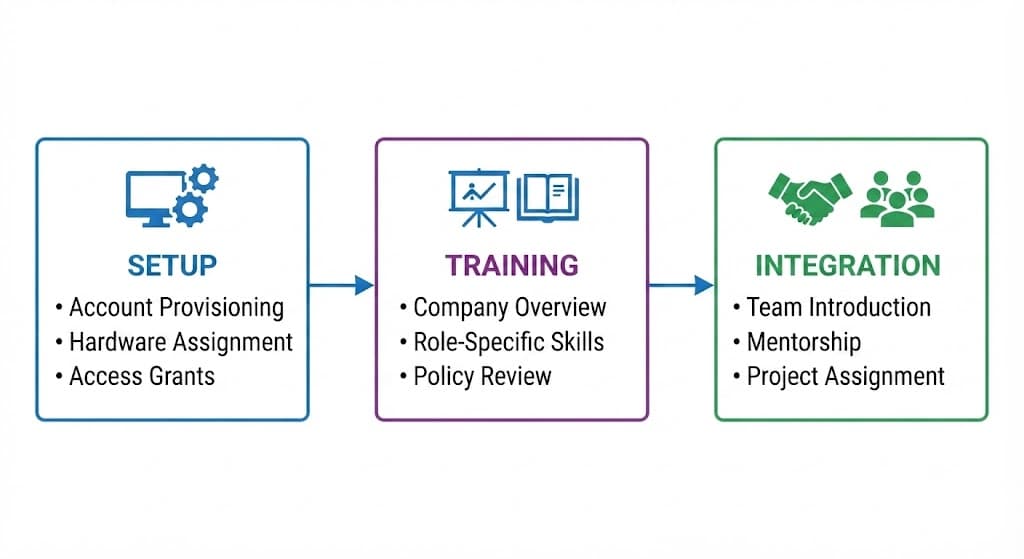
Onboarding effectively integrates new employees into the organization via a structured framework. First, the setup phase comprises administrative tasks such as paperwork and arranging IT access. Following this is the training phase, where new hires learn their job duties through various training methods and resources. Finally, the integration phase facilitates connections with colleagues and aligns new hires with the company's culture, ensuring they feel welcomed and valued. Collectively, these phases create a seamless transition into the company, which enhances retention and job satisfaction.
How Employee Onboarding Fits Into the HR Process
Onboarding functions as a crucial integration process for newly hired employees, working synergistically with related HR processes like preboarding and first-day orientation. Preboarding, which takes place after acceptance but prior to the start date, allows new employees to complete necessary compliance paperwork and access essential resources, minimizing initial day overload and enabling them to feel welcomed and prepared.
First-day orientation complements onboarding through structured introductions to the company culture, team dynamics, and specific job expectations. This initial engagement is instrumental in establishing the tone for ongoing employee development. Although compliance paperwork is often perceived as bureaucratic, it is essential for imparting foundational knowledge about company policies, benefits, and legal obligations. Collectively, these processes forge an engaging onboarding experience that eases the transition while enhancing long-term employee satisfaction and retention.
Employee Onboarding Process: Key Stages of Integration
Employee onboarding marks a crucial journey beginning with a candidate's job offer acceptance and guiding them toward becoming effective and integrated members of the organization. This onboarding journey can be segmented into essential stages, each designed meticulously to improve the new hire's experience and ensure alignment with the company's culture.
- Pre-Onboarding: This initial stage includes tasks such as sending out formal contracts and setting up necessary accounts. HR reaches out to ensure new hires feel welcomed even before their start date.
- Orientation: On the first day, orientation introduces new employees to company policies, core values, and team members. HR and direct supervisors typically facilitate this session, focusing on setting expectations and enhancing engagement from the beginning.
- Training and Development: In the subsequent weeks, there will be structured training sessions that equip new hires with essential skills and knowledge pertinent to their roles. This stage is crucial for instilling competence and confidence as they assume their responsibilities.
- Integration: New hires gradually integrate into ongoing projects and engage in team dynamics. Continuous feedback and mentorship from peers foster camaraderie and a sense of belonging within the organization.
- Long-Term Development: This stage emphasizes career growth, where regular check-ins and performance reviews from managers support employee development and alignment with organizational objectives. This proactive approach ensures ongoing engagement and long-term retention.
The different phases of the onboarding process are pivotal in shaping the overall experience for new hires, paving the way towards enhanced employee satisfaction and longevity within the organization.
Roles and Responsibilities in the Employee Onboarding Process
Successful onboarding depends on a collaborative approach involving multiple stakeholders, each with defined responsibilities. Human Resources (HR) spearheads the onboarding strategy, coordinating processes while ensuring compliance with company policies. Hiring Managers are essential for providing job-specific training and aligning new recruits with team goals. IT teams handle technical setups, ensuring new hires have access to the necessary tools and resources from day one. Payroll oversees compensation arrangements, while Facilities prepares a welcoming workspace.
Mentors play a critical role in guiding new hires through the nuances of company culture, while Leadership sets the overall tone of the onboarding experience, demonstrating their commitment to employee success. Meanwhile, New Recruits must take an active role by engaging in the process, asking questions, and seeking clarification. Collectively, these roles create a supportive environment that enriches the onboarding experience, ultimately contributing to better retention rates and heightened employee satisfaction.
The Onboarding Process: From Preboarding to the First 90 Days
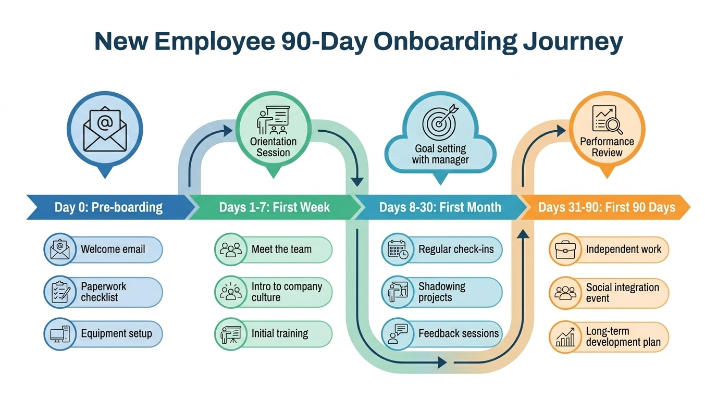
The onboarding journey commences even before a new employee steps foot in the office. Preboarding activities, occurring after hiring but before the start date, involve sending welcome emails, sharing essential documentation, and introducing newcomers to their teams through virtual meetings. This phase cultivates anticipation and lays a foundational sense of belonging, enabling new employees to become familiar with corporate culture and expectations.
Upon commencement, the first week is critical for orientation, where new hires immerse themselves in company policies, benefits, and culture. Key activities, including tailored training sessions and one-on-one meetings with supervisors, are vital during this period, ensuring that new employees feel welcomed and informed. Engaging them in social activities facilitates early relationship-building with colleagues, solidifying a sense of community right from the start.
As onboarding continues over the first 90 days, ongoing check-ins and feedback sessions become essential for employee development. This period involves setting collaborative goals and performance expectations, which allows new hires to align their contributions with overarching company objectives seamlessly. With continuous support and accessible resources throughout these stages, a smooth transition is ensured, resulting in improved employee readiness, satisfaction, and retention—critical components contributing to organizational success.
Common Employee Onboarding Challenges and How to Overcome Them
Various onboarding models—remote, hybrid, frontline, and inclusive—present distinct challenges during employee integration. Remote onboarding frequently lacks personal interaction, making it difficult for new hires to develop meaningful relationships. Hybrid models may encounter inconsistencies, leading to feelings of isolation for team members who are not physically present. Additionally, frontline onboarding can prove tricky due to time constraints and fluctuating work schedules that impede training efforts. Conversely, inclusive onboarding practices aim to address diverse needs but may require additional resources and training to implement effectively.
To address these challenges, organizations can implement digital onboarding platforms that enhance communication through video calls and chat functions, ensuring connectivity even in remote environments. Standardizing onboarding procedures across hybrid models can lead to a seamless and inclusive experience. Providing flexible schedules for frontline personnel and introducing accessibility tools fosters engagement, thereby creating an onboarding process that is robust and welcoming for all new employees.
Measuring Employee Onboarding Effectiveness: Metrics, Benefits, and Challenges
The importance of effective onboarding is increasingly acknowledged for its role in enhancing employee engagement, reducing turnover, and increasing overall job satisfaction. Studies demonstrate that organizations with standardized onboarding processes may improve retention rates by as much as 25%. However, establishing a direct correlation between these benefits and effective onboarding can be challenging due to factors such as organizational culture and individual employee differences.
To assess the success of onboarding initiatives, companies typically evaluate metrics like employee retention rates, time to productivity, and job satisfaction surveys. Nonetheless, each of these metrics comes with inherent limitations: retention rates may be affected by external variables, productivity timelines can vary significantly depending on role complexity, and surveys may capture immediate sentiments rather than long-term adjustments. Hence, while data supports the value of effective onboarding, measuring its impact must be approached with caution to avoid oversimplification.
Key Pitfalls in Onboarding and Improvement Strategies
Employee onboarding is a critical process for ensuring a smooth transition into new roles; however, common pitfalls can substantially hamper its effectiveness. Notable mistakes companies often make include:
- Lack of Clear Objectives: A failure to define specific goals can create confusion and disengagement.
- Insufficient Orientation: Inadequate introductions to company culture, policies, and procedures may leave new hires feeling unprepared.
- Neglecting Follow-ups: Overlooking regular check-ins can cause new employees to feel isolated and unsupported.
To enhance the onboarding experience, take into consideration the following actionable strategies:
- Create a Structured Onboarding Plan: Develop a clear timeline with identifiable milestones for new hires.
- Encourage Relationships with Current Employees: Promote interactivity between new hires and seasoned staff for smoother integration.
- Solicit Feedback: Implement surveys that capture insights from newcomers concerning their onboarding journey.
By addressing these common pitfalls, managers can improve the onboarding process and, consequently, drive higher employee satisfaction and retention.
Making Onboarding Effective: Strategic Takeaways
Effective onboarding serves as a cornerstone for assimilating new employees, profoundly affecting their retention and satisfaction. As explored in this article, a structured onboarding process fosters engagement and boosts productivity from day one. Managers should prioritize creating a welcoming environment, clearly articulating expectations, and facilitating ongoing feedback throughout this critical phase. Additionally, establishing a mentorship program can bridge the gap between new hires and seasoned employees, cultivating an enduring culture of support. By integrating these strategies, organizations can enhance the experiences of new employees while simultaneously driving operational success toward achieving their long-term objectives.